An Independent Social Art Movement in Iran (Est. Winter 2008)
Founded and curated by Jalaleddin Mashmooli, transforming rural environments into interactive contemporary art spaces.
Formation & Steering Committee
Winter 2008
The idea took shape over a winter of long conversations in 2008. The question was deliberately simple: what happens when contemporary art leaves the gallery and is made, seen, and argued about in the place where people actually live? Rather than staging exhibitions for rural audiences, the group proposed working with them — arriving in a village, setting up studios in courtyards, orchards, and riverbanks, and inviting residents to create alongside visiting artists.
A steering committee was formed to give the initiative structure without turning it into an institution. Its founding members were Mehdi Bahar, Mehdi Abbasi, Nasrin Qaderi, and Mohsen Asadollahian, working with Jalaleddin Mashmooli on site selection, scheduling, and relations with village communities. Specialised teams were organised around three areas of practice.
Photography
Continuous documentation of workshops, participants, and works, forming the movement's archive.
Graphic Design
Posters, signage, and printed matter produced independently for each village edition.
Painting Workshops
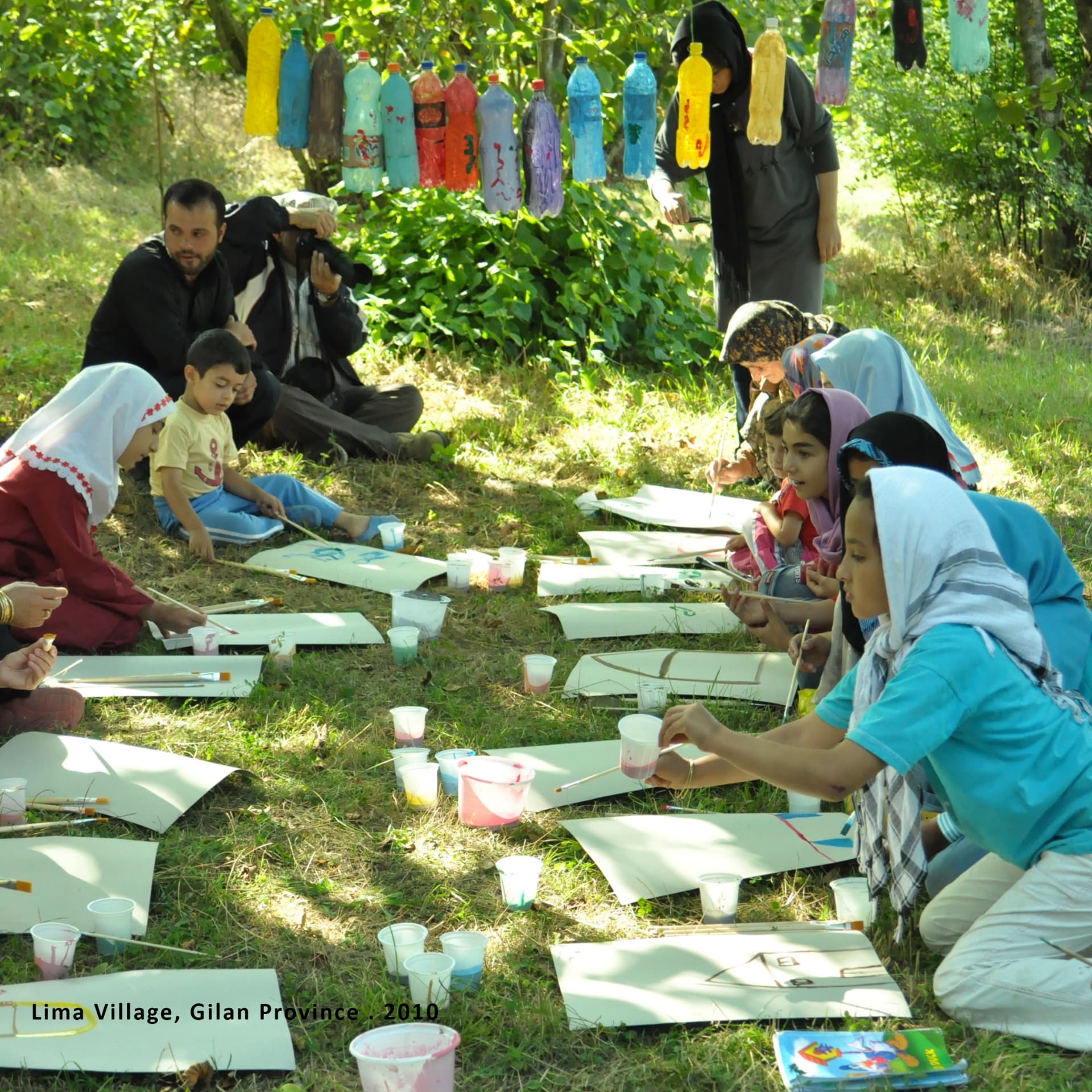
Open-air studios run with children, teenagers, and adults in each host village.
Theoretical Foundations & Critical Dialogues
Before the first event, the founding group consulted prominent Iranian art historians and critics, testing the proposition against precedents in European and Russian art history.
Hamid Sivari
Former head of research, Tehran Museum of Contemporary Art
Situated the initiative within its historical antecedents — the Peredvizhniki and the populist rural turn of nineteenth-century Russia, and the decentralised cultural programmes of twentieth-century France — arguing that art carried to the countryside has always been a question of audience sovereignty rather than charity.
Ali Asghar Gharabaghi
Art critic and translator
Traced the lineage of post-war European social art practice, where collective and community-based work emerged as a response to institutional exhaustion, and advised that the project define its own vocabulary rather than import a ready-made model.
Aidin Aghdashloo
Master artist
Counselled patience: a collective project of this nature reaches organic maturity only over roughly five years of continuous practice, and its value would be measured by persistence in the field rather than by early visibility.
The First Official Event
Farahabad, Sari — April 11, 2008
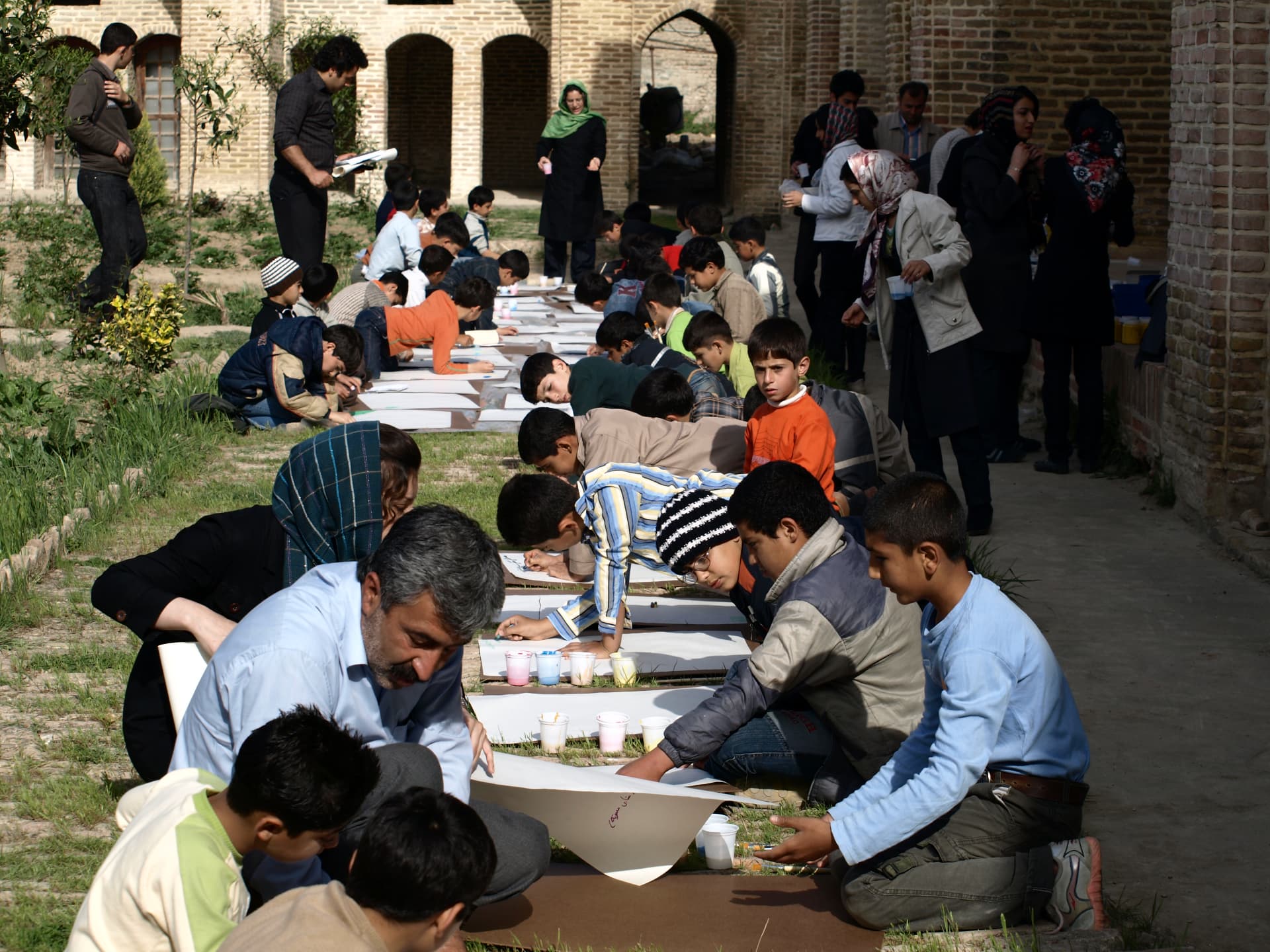
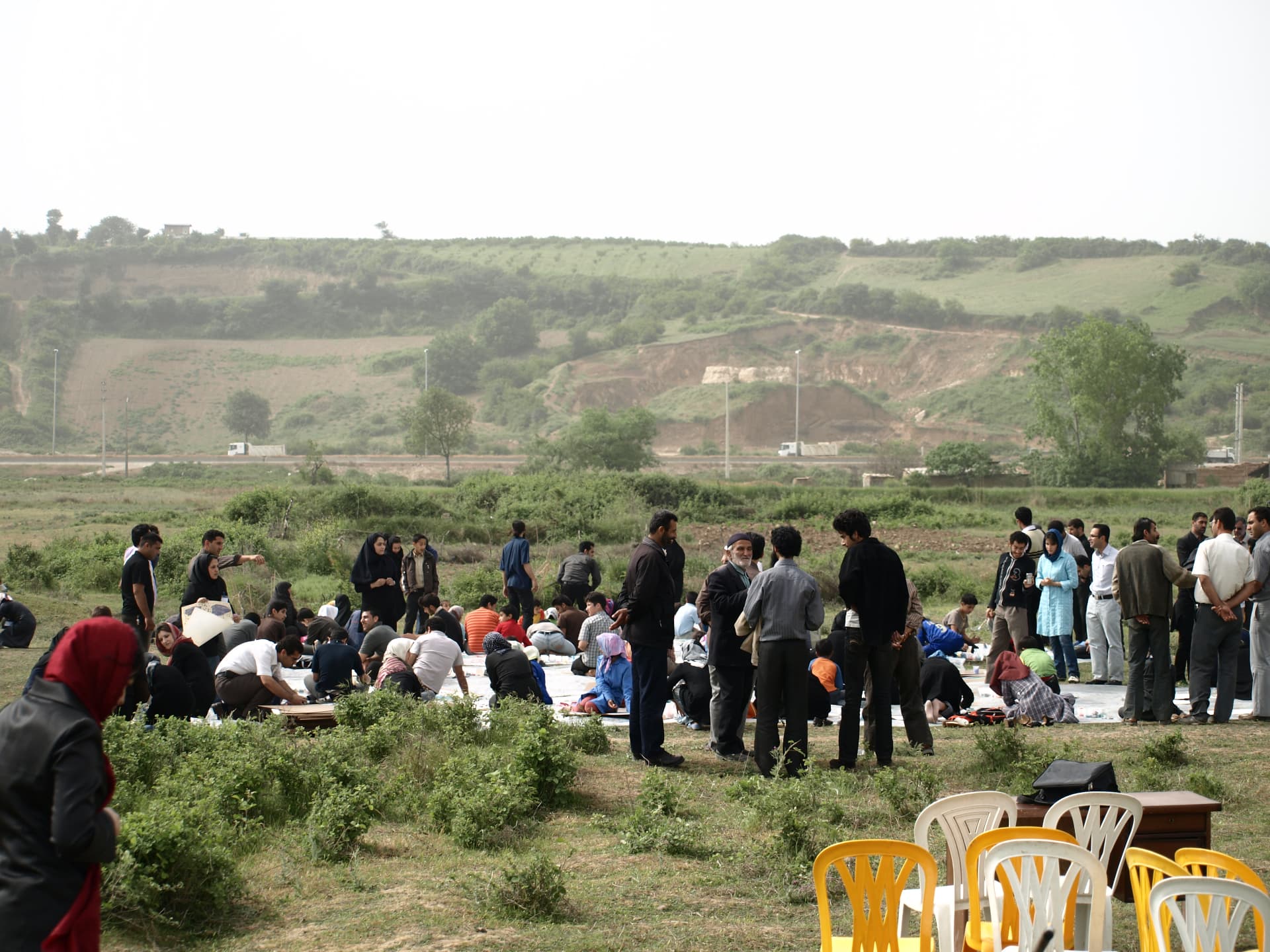
On April 11, 2008, the first official event of Art in Village was held across seven villages in the Farahabad district of Sari, Mazandaran. Studios were set up simultaneously in courtyards, on village paths, and along the coastal plain, with works exhibited where they were made.
More than 164 children, teenagers, and adults took part alongside the artists of the Hajm-e Sabz group. The paintings, photographs, and documentation produced that day became the foundational archive of Art in Village, and the template for every edition that followed.
Archival Photo Gallery
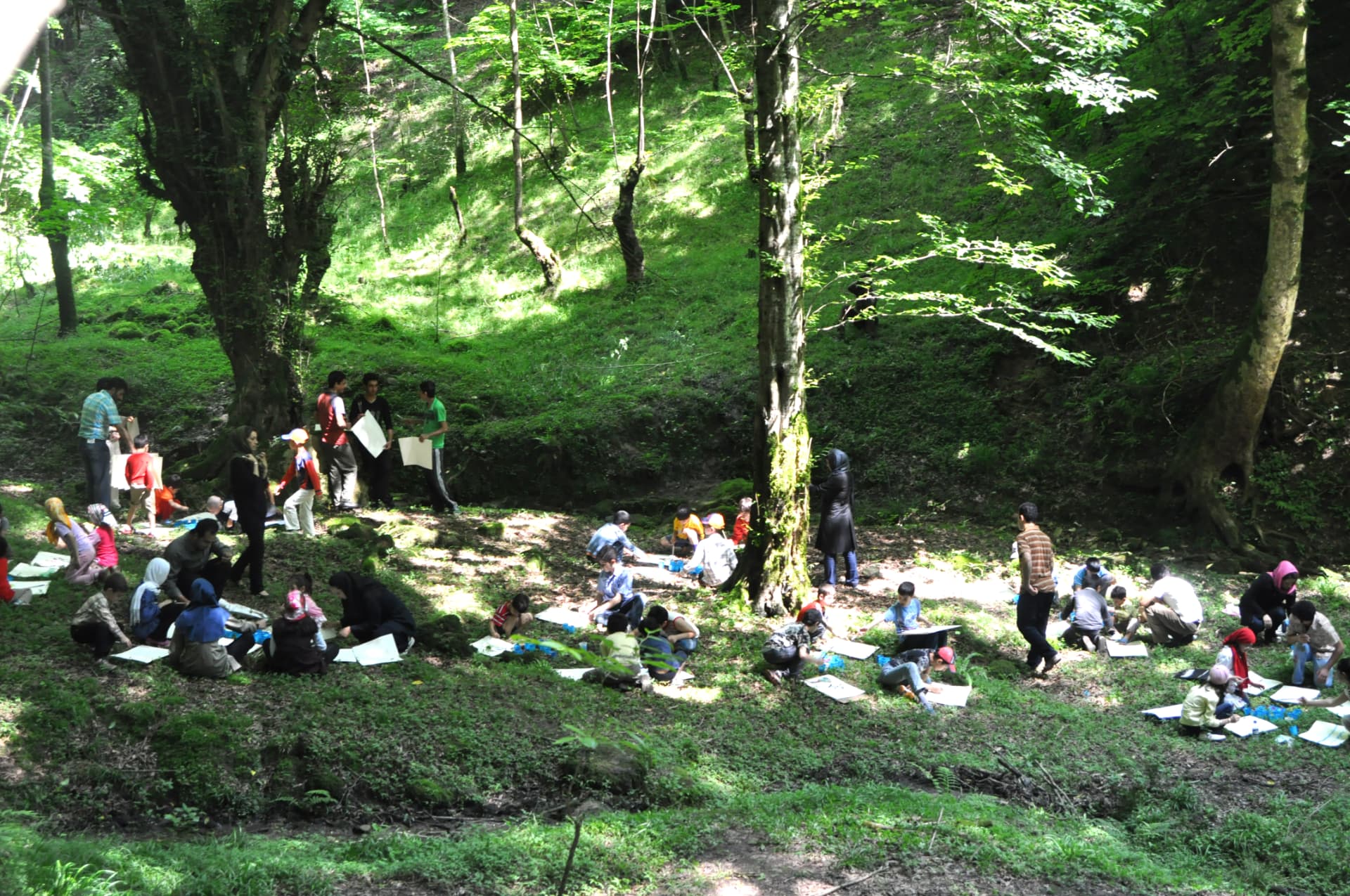
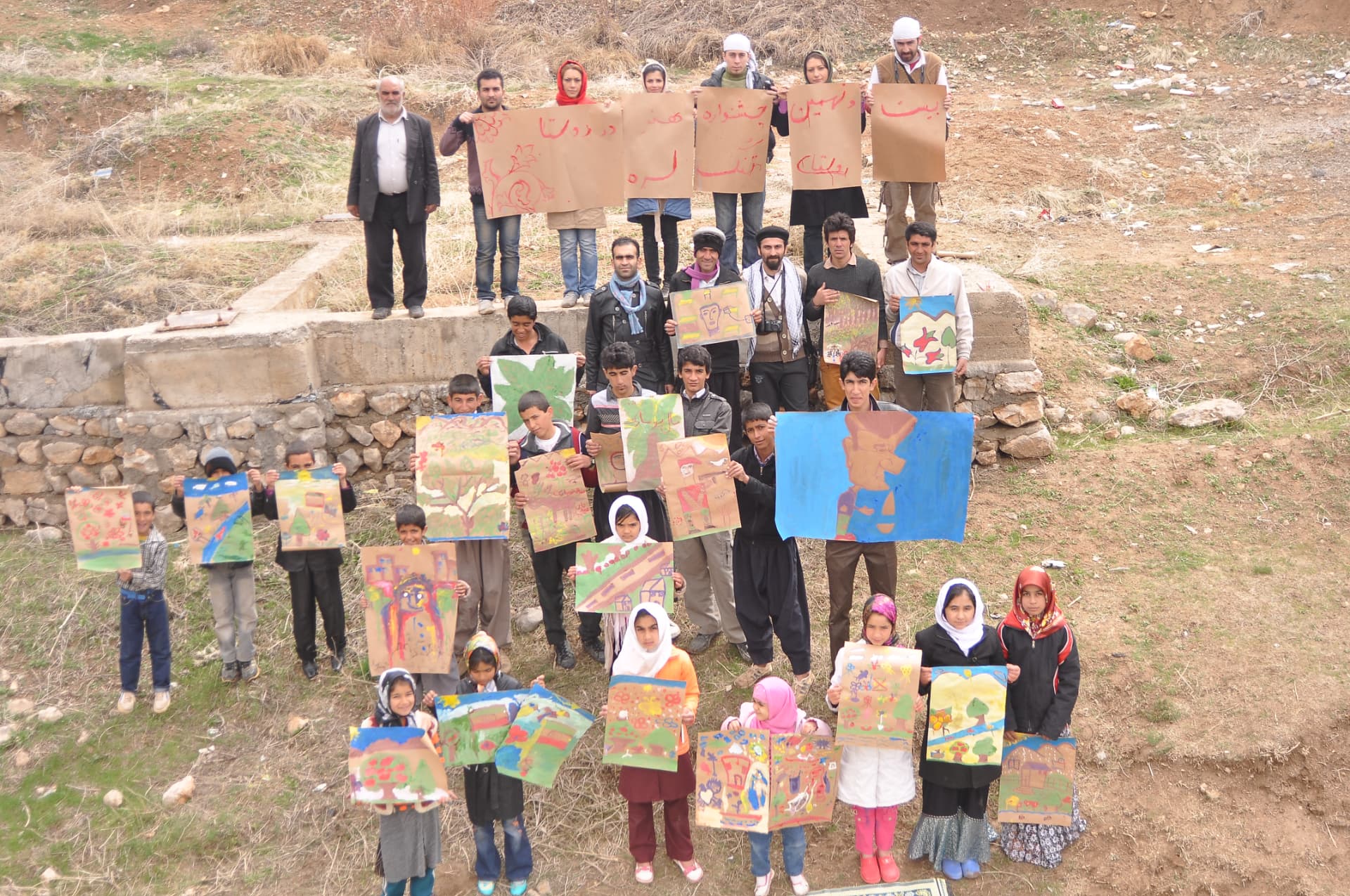
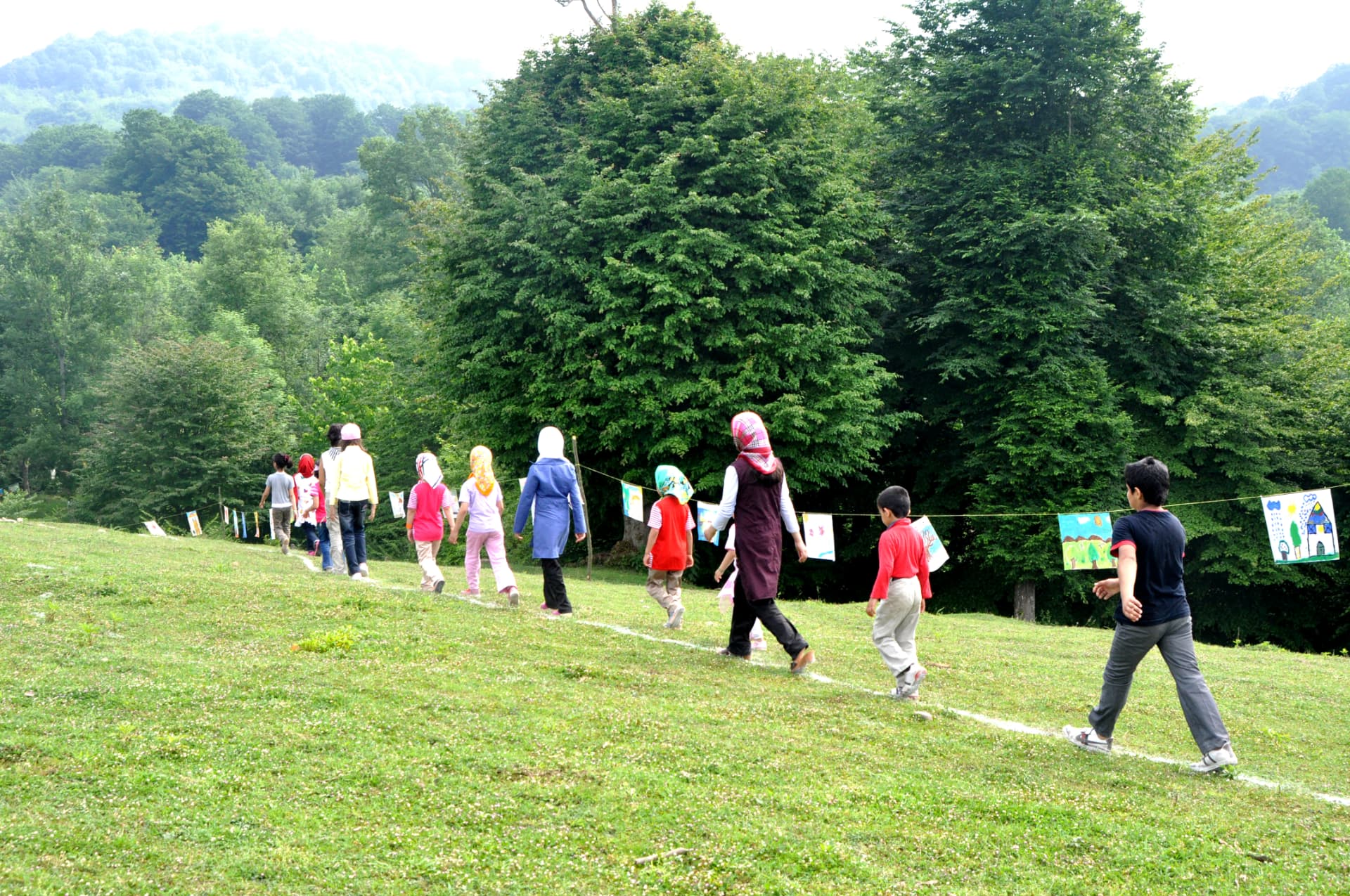
Courtyard workshop, Farahabad, SariChildren painting outdoors in the forest clearingOpen-air community gathering around finished worksVillage pathway turned into an exhibition routeGroup community portrait after a painting sessionWorks displayed on clotheslines and wooden fences